 Image 1 of 5
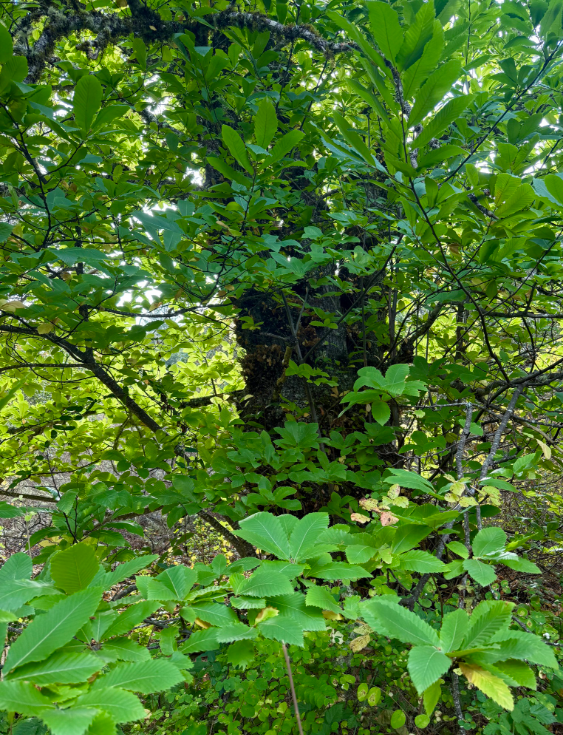 Image 2 of 5
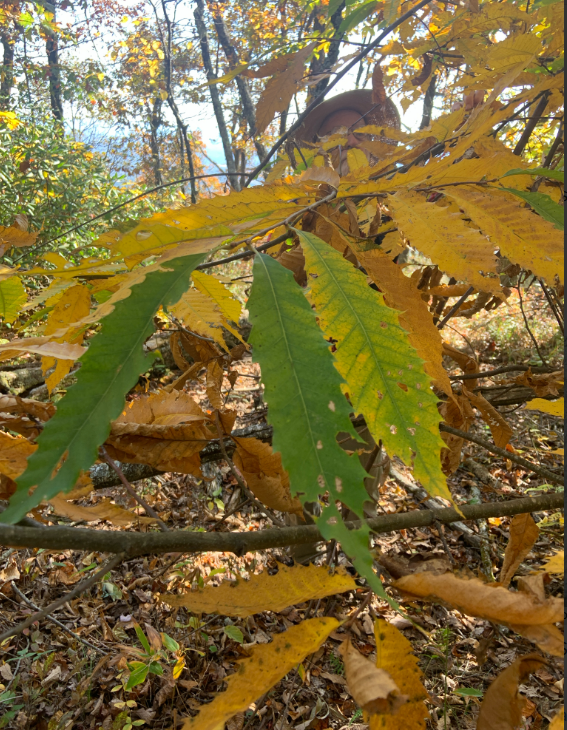 Image 3 of 5
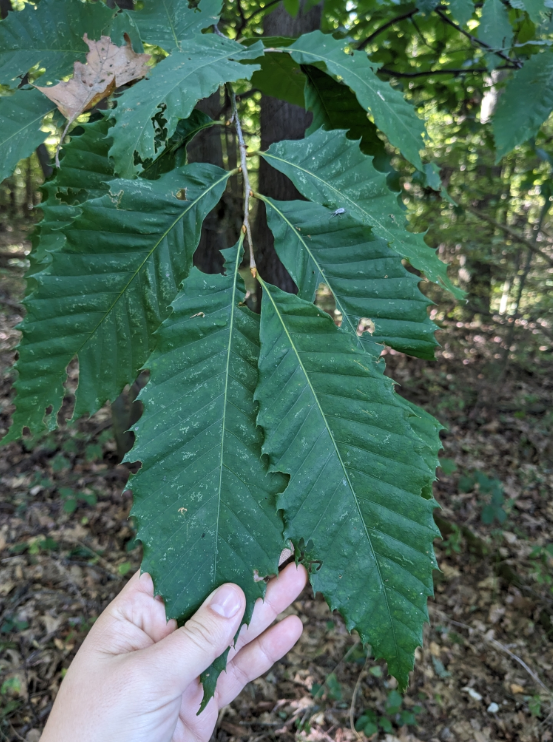 Image 4 of 5
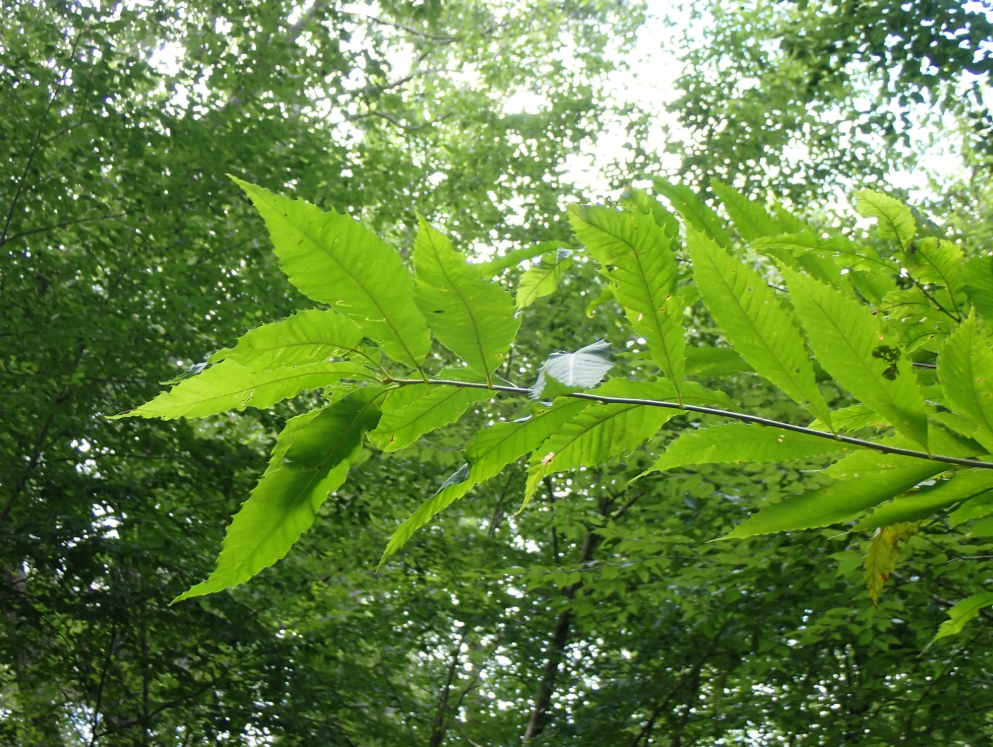 Image 5 of 5
American Chestnut
(Castanea dentata)
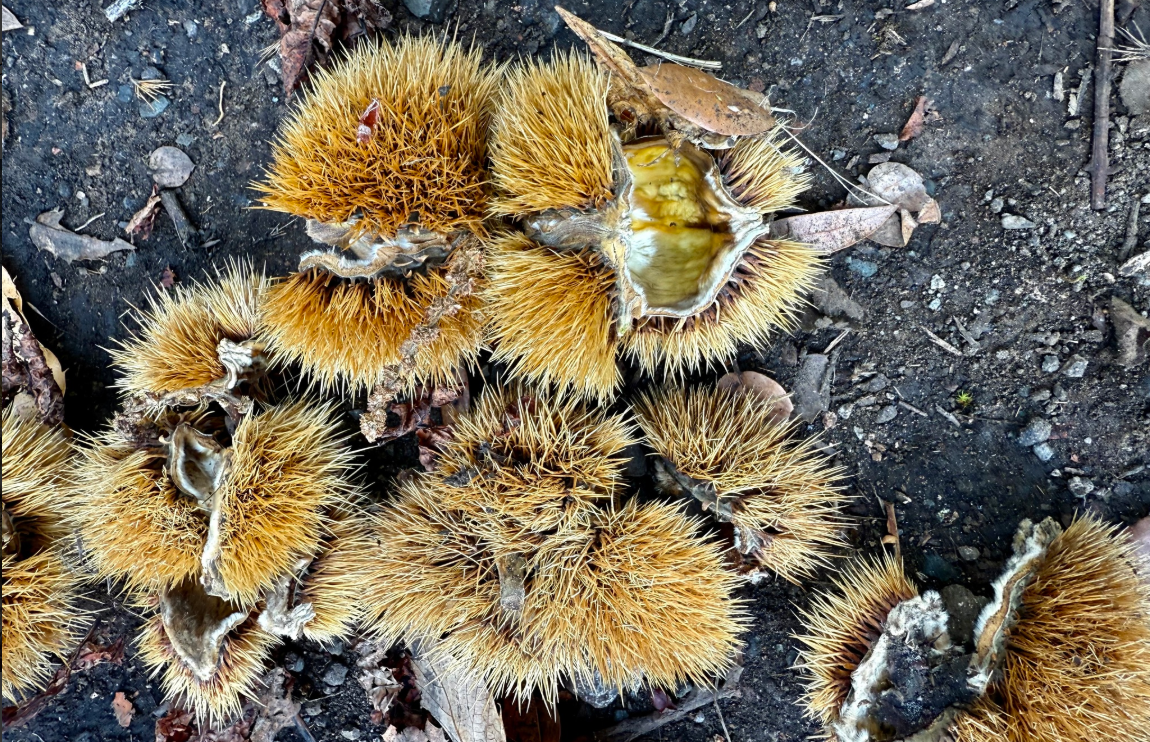
The American chestnut is a large, fast-growing native tree once known as the “King of the Forest” throughout eastern North America. It produces fragrant, creamy-white flowers in early summer, followed by spiny green burrs that contain sweet, edible chestnuts in the fall. These nuts were historically an important food source for both people and wildlife. The tree features long, toothed leaves, dark ridged bark, and a broad, stately canopy.
The American Chestnut Council offers 100% American chestnut seedlings each spring as part of ongoing restoration efforts to bring back this iconic tree. After chestnut blight nearly drove the species to extinction in the early 1900s, only scattered survivors and stump sprouts remained. These seedlings are grown from the offspring of trees discovered in Benzie County, Michigan, which survived for years through isolation. Although the original trees eventually succumbed to the blight, some of their descendants continue to produce nuts today. Seedlings are 10–18" tall and are grown in a nursery in Newaygo County.
Requirements:
Light: Full sun to partial shade
Soil: Well-drained, moist soils
Key Features:
Bloom Period: Late spring to early summer
Mature Size: 40–90 ft tall, 30–50 ft spread - Do not plant under powerlines.
Edible Fruit: Sweet, edible chestnuts enclosed in spiny burrs
Wildlife Value: Nuts are highly valued by deer, turkeys, squirrels, and birds
Plant Care:
Plant in full sun for best growth. Do not plant under power lines due to mature size. Requires two trees for pollination. Protect young trees from drought and deer browsing. While susceptible to chestnut blight, ongoing restoration efforts continue to support the return of this iconic tree.
_______________________________________________________
*A mature height of less than 15 feet is recommended for trees planted near power lines. Tall growing trees should be planted a minimum of 20 feet away from power lines, and 50 feet away to avoid future pruning.
*This plant will be packaged as "bare root". Bare root plants have no soil around their roots. Bare root trees, shrubs, and perennials must be planted as soon as possible before growth begins. Find care and planting instructions here: https://www.arborday.org/trees/planting/bare-root.cfm
Item only available in bundles
Available through the Spring Tree Sale. Pick up from Kardel Hall, Eaton Co. Fairgrounds
Friday, April 10, 2026 9AM to 6PM
Saturday, April 11, 2026 9AM to 11AM
American Chestnut
(Castanea dentata)
The American chestnut is a large, fast-growing native tree once known as the “King of the Forest” throughout eastern North America. It produces fragrant, creamy-white flowers in early summer, followed by spiny green burrs that contain sweet, edible chestnuts in the fall. These nuts were historically an important food source for both people and wildlife. The tree features long, toothed leaves, dark ridged bark, and a broad, stately canopy.
The American Chestnut Council offers 100% American chestnut seedlings each spring as part of ongoing restoration efforts to bring back this iconic tree. After chestnut blight nearly drove the species to extinction in the early 1900s, only scattered survivors and stump sprouts remained. These seedlings are grown from the offspring of trees discovered in Benzie County, Michigan, which survived for years through isolation. Although the original trees eventually succumbed to the blight, some of their descendants continue to produce nuts today. Seedlings are 10–18" tall and are grown in a nursery in Newaygo County.
Requirements:
Light: Full sun to partial shade
Soil: Well-drained, moist soils
Key Features:
Bloom Period: Late spring to early summer
Mature Size: 40–90 ft tall, 30–50 ft spread - Do not plant under powerlines.
Edible Fruit: Sweet, edible chestnuts enclosed in spiny burrs
Wildlife Value: Nuts are highly valued by deer, turkeys, squirrels, and birds
Plant Care:
Plant in full sun for best growth. Do not plant under power lines due to mature size. Requires two trees for pollination. Protect young trees from drought and deer browsing. While susceptible to chestnut blight, ongoing restoration efforts continue to support the return of this iconic tree.
_______________________________________________________
*A mature height of less than 15 feet is recommended for trees planted near power lines. Tall growing trees should be planted a minimum of 20 feet away from power lines, and 50 feet away to avoid future pruning.
*This plant will be packaged as "bare root". Bare root plants have no soil around their roots. Bare root trees, shrubs, and perennials must be planted as soon as possible before growth begins. Find care and planting instructions here: https://www.arborday.org/trees/planting/bare-root.cfm
Item only available in bundles
Available through the Spring Tree Sale. Pick up from Kardel Hall, Eaton Co. Fairgrounds
Friday, April 10, 2026 9AM to 6PM
Saturday, April 11, 2026 9AM to 11AM