
 Image 1 of 4
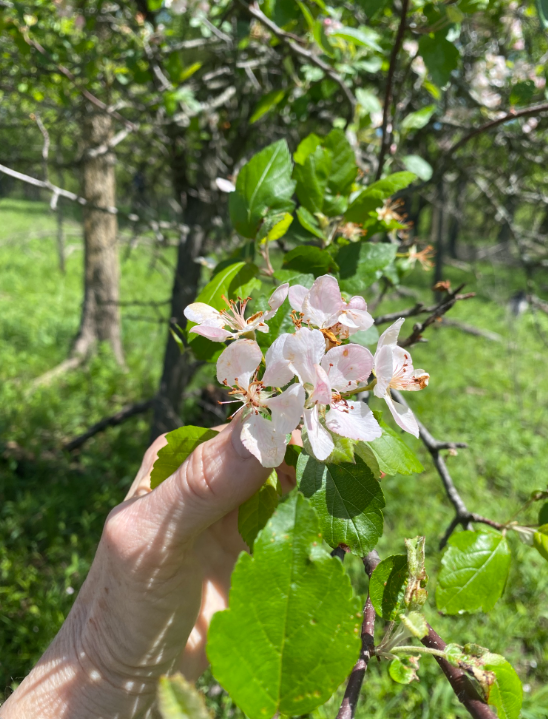 Image 2 of 4
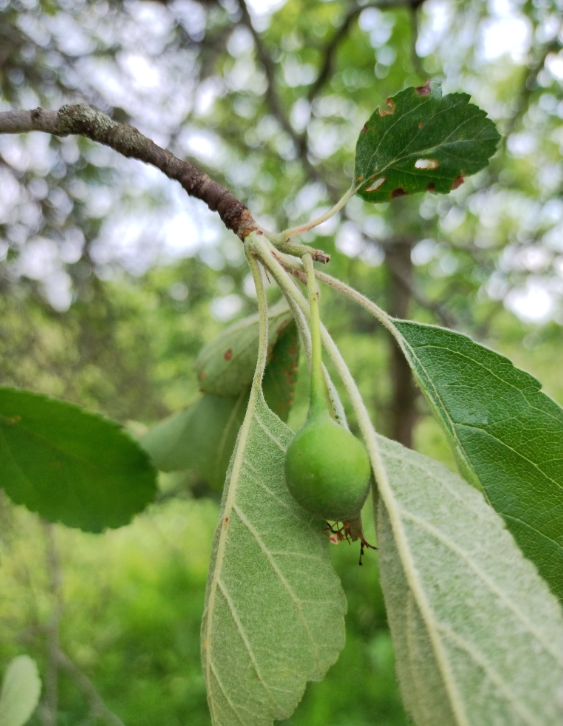 Image 3 of 4
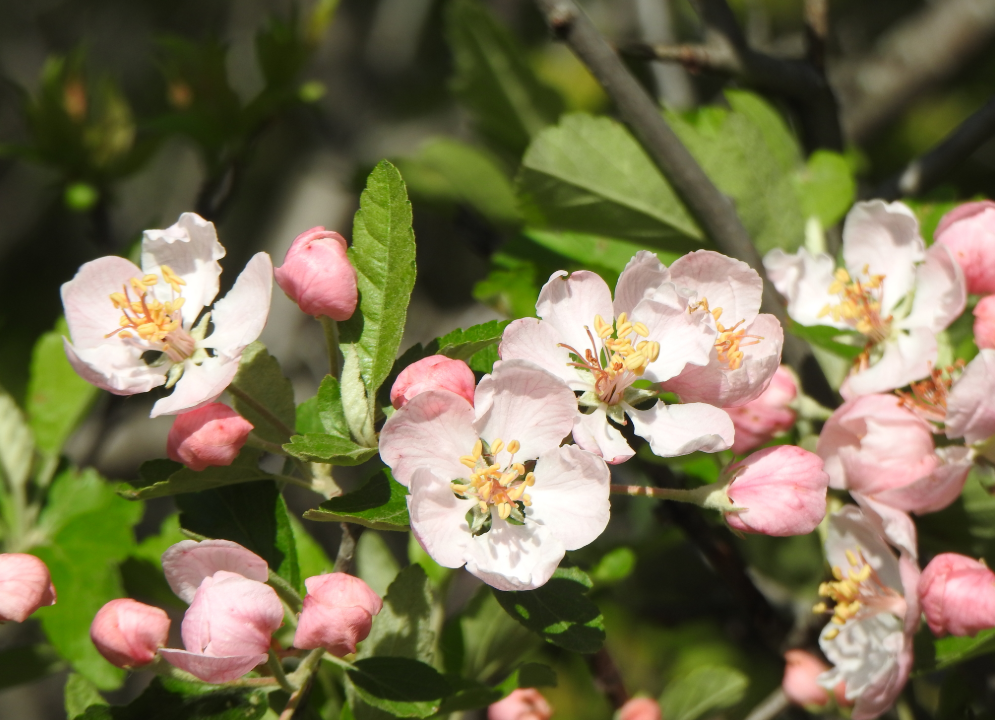 Image 4 of 4
Size: 2-3' Liners
Prairie Crabapple (Malus ioensis)
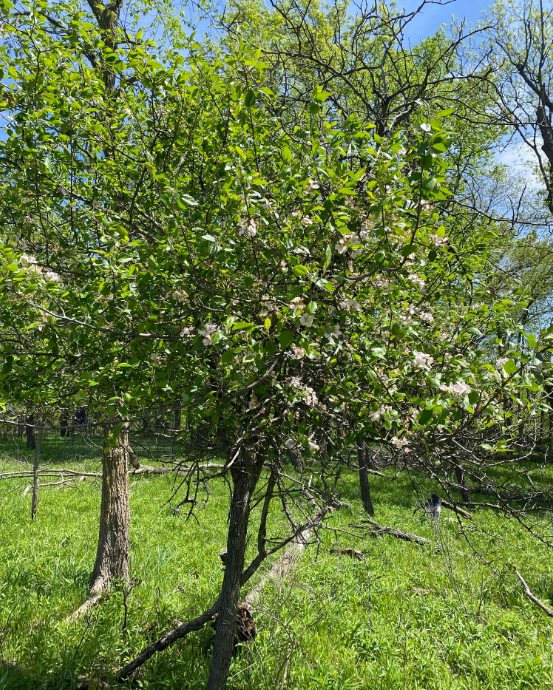
Prairie crabapple is a small, native tree once common across Midwest prairies and savannas. In mid to late spring, deep pink buds open to clusters of fragrant white flowers, creating a spectacular display. By fall, the tree bears yellow-green crabapples about one inch in diameter that are a valuable food source for birds, mammals, and pollinators. Its dark green leaves may turn red in fall, and the bark is scaly and peeling with short thorns along the stems.
Requirements:
Light: Full sun to partial shade
Soil: Moist, well-drained soil; tolerates acidic, alkaline, and dry sites
Key Features:
Bloom Period: Mid to late spring
Mature Size: 20–30 feet tall and wide
Wildlife Value: Flowers attract bees, butterflies, and other pollinators; fruits are eaten by birds, deer, rabbits, and small mammals
Plant Care:
Prefers full sun for best flowering and fruiting. Do not plant under power lines. Prune lightly to remove dead, diseased, or crossing branches and to allow light into the canopy. Prairie crabapple transplants well and adapts to a variety of soils. This species is susceptible to cedar-apple rust - learn more here.
*This plant will be packaged as "bare root". Bare root plants have no soil around their roots. Bare root trees, shrubs, and perennials must be planted as soon as possible before growth begins. Find care and planting instructions here: https://www.arborday.org/trees/planting/bare-root.cfm
Item only available in bundles
Available through the Spring Tree Sale.
Pick up from Kardel Hall, Eaton Co. Fairgrounds
Friday, April 10, 2026 9AM to 6PM
Saturday, April 11, 2026 9AM to 11AM
Photo Credit: Featured Image by Liren Varghese: https://www.inaturalist.org/photos/380853151
Size: 2-3' Liners
Prairie Crabapple (Malus ioensis)
Prairie crabapple is a small, native tree once common across Midwest prairies and savannas. In mid to late spring, deep pink buds open to clusters of fragrant white flowers, creating a spectacular display. By fall, the tree bears yellow-green crabapples about one inch in diameter that are a valuable food source for birds, mammals, and pollinators. Its dark green leaves may turn red in fall, and the bark is scaly and peeling with short thorns along the stems.
Requirements:
Light: Full sun to partial shade
Soil: Moist, well-drained soil; tolerates acidic, alkaline, and dry sites
Key Features:
Bloom Period: Mid to late spring
Mature Size: 20–30 feet tall and wide
Wildlife Value: Flowers attract bees, butterflies, and other pollinators; fruits are eaten by birds, deer, rabbits, and small mammals
Plant Care:
Prefers full sun for best flowering and fruiting. Do not plant under power lines. Prune lightly to remove dead, diseased, or crossing branches and to allow light into the canopy. Prairie crabapple transplants well and adapts to a variety of soils. This species is susceptible to cedar-apple rust - learn more here.
*This plant will be packaged as "bare root". Bare root plants have no soil around their roots. Bare root trees, shrubs, and perennials must be planted as soon as possible before growth begins. Find care and planting instructions here: https://www.arborday.org/trees/planting/bare-root.cfm
Item only available in bundles
Available through the Spring Tree Sale.
Pick up from Kardel Hall, Eaton Co. Fairgrounds
Friday, April 10, 2026 9AM to 6PM
Saturday, April 11, 2026 9AM to 11AM
Photo Credit: Featured Image by Liren Varghese: https://www.inaturalist.org/photos/380853151